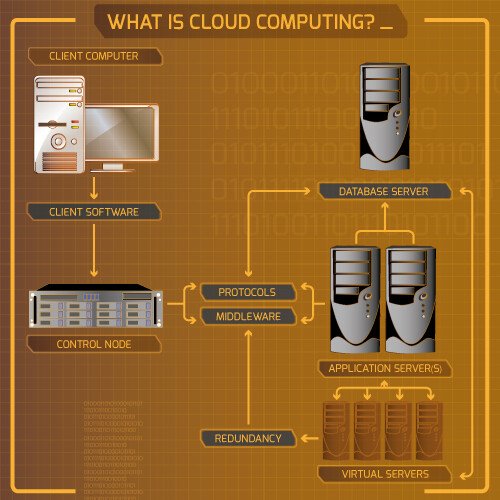
When major hyperscalers like Amazon Web Services, Microsoft Azure, or Google Cloud Platform experience unexpected regional disruptions, hundreds of digital businesses instantly grind to a halt. In today’s hyper-connected enterprise ecosystem, relying on a single infrastructure provider or unhedged architectural zone is an existential business vulnerability. Gartner data consistently shows that enterprise IT downtime costs an average of $5,600 per minute, surpassing $300,000 per hour for high-velocity software platforms. Without a proactive SaaS redundancy plan, your company risks catastrophic financial bleed, breached service-level agreements (SLAs), and lasting brand degradation during a global cloud outage. This comprehensive guide walks engineering leaders and operations executives through designing, building, and executing an airtight redundancy framework that guarantees business continuity regardless of external infrastructure failures.
The Real Cost of Cloud Downtime: Why Redundancy Is Essential
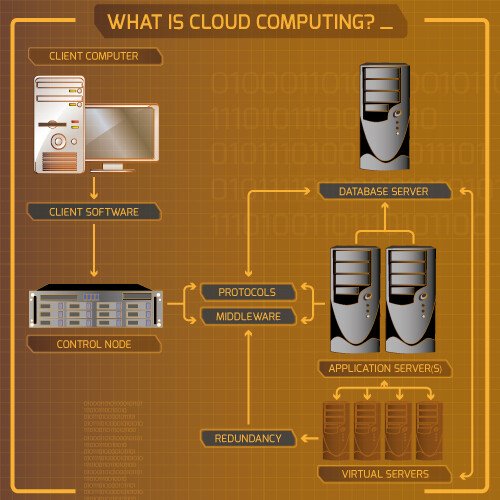
Unplanned downtime impacts far more than direct transaction processing. When mission-critical software goes dark, the cascading impacts hit every operational pillar of your organization. To build an executive business case for high-availability redundancy, engineering leaders must quantify downtime through direct and indirect metrics.
Direct Financial Losses and SLA Penalties
Direct costs manifest as lost checkout conversions, paused subscriptions, and contractual rebate payouts triggered by enterprise SLA violations. If an enterprise platform promises a 99.99% (“four nines”) availability standard, the allowable downtime across an entire year is just 52 minutes and 36 seconds. Breaching this threshold often triggers substantial credit paybacks—frequently between 10% and 50% of monthly billings—wiping out recurring revenue margins instantly.
Indirect Productivity Collapse and Reputation Damage
Internal employee downtime represents thousands of non-productive hours across customer support, sales, and software development teams diverted toward damage control. Concurrently, customer churn accelerates when end-users discover that your platform lacks basic resilience. In business-to-business (B2B) markets, prospects evaluate reliability alongside core features; a public outage history without visible redundancy safeguards can paralyze enterprise sales cycles.
Architectural Pillars of Modern SaaS Redundancy
True software resilience requires moving beyond simple automated backups. Modern high-availability systems isolate core functionality and eliminate single points of failure across infrastructure, storage, and networking layers.
Multi-Region vs. Multi-Cloud Architecture
The first strategic decision involves selecting between multi-region failover within a single cloud provider or an active multi-cloud topology distributed across distinct providers (such as AWS and Azure). Multi-region deployments are typically simpler to architect because proprietary tools and managed services remain consistent. However, multi-cloud redundancy offers the ultimate protection against control-plane failures, global DNS issues, and provider-wide credential compromises. While multi-cloud configurations carry higher operational overhead, they provide true independence from the operational health of any single corporate entity.
Decoupled Microservices and Graceful Degradation
A resilient system must never fail entirely when a single sub-system experiences an outage. By decoupling monolithic architectures into autonomous microservices connected via asynchronous message queues (such as Apache Kafka or AWS SQS), organizations achieve graceful degradation. For instance, if an analytics data ingestion pipeline crashes due to a database cluster outage, core user authentication, billing, and document access must remain fully operational. The frontend presents reduced functionality to the user without serving a catastrophic HTTP 500 error.
Intelligent DNS Routing and Global Traffic Management
Your failover mechanism is only as dependable as the DNS layer orchestrating inbound traffic. Employing Anycast routing and automated latency-based DNS health checks ensures that when an entire availability zone or region fails, incoming client traffic is instantly rerouted to healthy compute endpoints. Integrating services like Cloudflare or AWS Route 53 with aggressively low Time-to-Live (TTL) values—typically 30 to 60 seconds—minimizes stale caching and guarantees rapid traffic shifting.
A 4-Step Implementation Framework for Resilient SaaS
Executing an enterprise-grade SaaS redundancy plan requires structured engineering workflows. Follow this four-step phased roadmap to implement comprehensive multi-region failover.
Step 1: Dependency Mapping and Critical Tiering
Begin by auditing every internal and external software dependency. Catalog all third-party APIs, authentication providers (such as Okta or Auth0), transactional databases, CDN edge nodes, and continuous integration pipelines. Categorize these assets into three distinct tiers:
- Tier 1 (Mission-Critical): Core database, user authentication, checkout endpoints, and API gateways. Maximum Allowable Outage (MAO): < 5 minutes.
- Tier 2 (Operational): Background reporting, batch exports, search indexing, and notifications. MAO: < 2 hours.
- Tier 3 (Non-Essential): Internal metrics tracking, audit log archiving, and administrative portal views. MAO: < 24 hours.
Step 2: Cross-Region Data Replication and Synchronization
Data persistence represents the most complex challenge in cloud outage mitigation. Choose an appropriate replication architecture based on your Recovery Point Objective (RPO):
- Active-Passive (Warm Standby): Data is replicated asynchronously to a secondary region. Compute resources in the secondary region are kept scaled down until a regional health failure is verified. This model balances engineering cost with low recovery times.
- Active-Active (Hot Dual-Run): Real-time bi-directional database synchronization across two or more regions. Compute clusters run simultaneously in both locations, processing live production traffic based on geographical proximity. This configuration offers near-zero RTO and RPO but demands robust distributed consensus algorithms to resolve write conflicts.
Step 3: Automated Health Checks and Zero-Touch Rerouting
Manual human intervention during a middle-of-the-night outage drastically inflates Mean Time to Recovery (MTTR). Configure automated synthetic monitoring agents across external global nodes to ping your primary infrastructure continuously. If an endpoint fails consecutive synthetic health checks over a 90-second window, automated orchestration scripts (via Terraform, Kubernetes operators, or custom serverless functions) must execute DNS failover, spin up standby compute clusters, and re-point database write masters without waiting for engineering triage.
Step 4: Edge Caching and Offline Resilience
Harness the distributed capabilities of modern Content Delivery Networks (CDNs) and edge workers. Configure edge compute runtimes (such as Cloudflare Workers or Fastly Compute@Edge) to serve cached stale content, deliver lightweight offline landing pages, and queue incoming write requests into distributed edge key-value stores. This guarantees that your users never encounter raw server timeouts while backend clusters recover.
Third-Party Vendor Risk and Edge Redundancy
Hyperscaler outages are not the only threat to your uptime. SaaS providers often suffer devastating downtime because an upstream third-party service—such as an identity provider, payment processor, or SMS gateway—encounters an unexpected disruption.
Upstream Identity and Authentication Fallbacks
If your single-sign-on (SSO) provider goes down, users cannot access your platform even if your core compute infrastructure is 100% healthy. Mitigate this dependency by implementing secondary authentication fallbacks. Maintain encrypted local emergency credentials for administrator accounts and support standard multi-factor authentication (MFA) tokens that function independently of external federated identity providers.
Payment Gateway Multi-Homing
For fintech and e-commerce platforms, payment gateway outages immediately halt cash flow. Implement smart payment orchestration layers that dynamically route credit card transactions across alternative payment processors (for example, routing automatically between Stripe and Adyen). If one processor reports elevated latency or degraded API responses, the orchestration engine routes transactions through the secondary partner seamlessly.
Chaos Engineering: Validating Redundancy Through Simulated Failure
A SaaS redundancy plan that has never been tested in production is nothing more than an unverified hypothesis. Organizations must actively validate their failover mechanisms through controlled chaos engineering.
Using frameworks such as Chaos Mesh, Gremlin, or AWS Fault Injection Simulator, schedule regular “Game Day” drills where engineering teams intentionally inject synthetic failures into production or staging environments. Terminate primary database clusters, simulate regional network latency spikes, black-hole DNS servers, and revoke third-party API keys. Measuring whether automated systems successfully fail over within your target Recovery Time Objective (RTO) reveals hidden architectural bottlenecks before a real crisis strikes.
SaaS Redundancy Strategy Comparison
Choosing the right architecture requires balancing implementation complexity, operational budget, and recovery velocity. Review the comparison below to identify the model best suited for your organization’s risk profile.
| Redundancy Model | Target RTO | Target RPO | Cost Factor | Implementation Complexity |
|---|---|---|---|---|
| Cold Standby (Backup & Restore) | 4 – 24 Hours | 1 – 12 Hours | Low (1.1x Baseline) | Low: Standard snapshots & scripts |
| Warm Standby (Active-Passive) | 5 – 15 Minutes | < 1 Minute | Moderate (1.3x – 1.5x) | Medium: Continuous data sync |
| Hot Dual-Run (Active-Active) | Near-Zero (< 30s) | Zero (Synchronous) | High (2.0x – 2.4x) | High: Distributed data resolution |
| Multi-Cloud Heterogeneous | < 1 Minute | Near-Zero | Extreme (2.5x+) | Very High: Multi-vendor abstractions |
Key Takeaways for Enterprise Resilience
- Audit all dependencies: Document third-party APIs, authentication providers, and cloud data paths to eliminate unnoticed single points of failure.
- Automate your failover: Never rely on manual human intervention during an outage; implement zero-touch automated health checking and DNS rerouting.
- Decouple services aggressively: Ensure non-critical microservice outages do not disrupt primary transactional user workflows.
- Establish strict RTO and RPO metrics: Define acceptable downtime and data loss limits explicitly across each service tier.
- Validate with Chaos Engineering: Routinely run simulated failure drills to guarantee that your redundancy systems operate under true stress conditions.
Pro Tip: Avoid the “split-brain” trap in multi-region active-active deployments. Always implement an odd-numbered distributed quorum node in an independent third region to adjudicate database master elections and prevent competing nodes from corrupting stateful data during network partitions.
Frequently Asked Questions
What is the difference between RTO and RPO in a SaaS redundancy plan?
Recovery Time Objective (RTO) measures the maximum acceptable duration of downtime before systems must be fully operational following a failure. Recovery Point Objective (RPO) refers to the maximum acceptable data loss measured in time (for example, losing up to five minutes of transactional data). A robust SaaS redundancy strategy balances both metrics against infrastructure budgets.
Is a multi-cloud redundancy strategy always better than multi-region within one provider?
Not necessarily. While multi-cloud redundancy shields organizations from complete provider-level shutdowns, it introduces severe operational complexity, data egress fees, and engineering fragmentation. For most enterprise applications, an active-passive or active-active multi-region deployment within a single top-tier cloud hyperscaler provides an optimal balance of cost, complexity, and 99.99% availability.
How can teams prevent DNS caching from delaying failover operations?
To ensure rapid traffic rerouting during an outage, engineering teams should configure external DNS records with short Time-to-Live (TTL) values, typically between 30 and 60 seconds. Additionally, leveraging Anycast IP routing directly in front of global load balancers eliminates reliance on client-side DNS propagation by rerouting network traffic at the BGP routing layer.
How do you synchronize transactional databases across regions without latency penalties?
Global transactional data synchronization typically relies on asynchronous replication to preserve low write latencies for users in primary regions. To avoid write conflict issues, many organizations adopt partitioned multi-master architectures, CockroachDB, or Amazon Aurora Global Database, which leverage dedicated storage-level replication fabrics to achieve cross-region propagation in under one second.
Can small SaaS startups afford multi-region redundancy?
Yes. Early-stage startups can implement cost-effective redundancy using serverless runtimes, containerized orchestration platforms like Kubernetes, and cloud-native managed databases with read-replicas. By utilizing on-demand compute infrastructure that scales up in a secondary region only during a disaster, startups can achieve high resilience without doubling their monthly infrastructure burn rate.
Latest News & Current Updates
Stay up to date with recent headlines and market developments related to How to Implement SaaS Redundancy Plans to Prevent Business Downtime During Global Cloud Outages:
- SaaS statistics for 2026: Growth, adoption, and market trends — Hostinger (11 Aug 2026)
- Conducting a health check on cloud-based supplier agreements in light of the AWS outage — Nixon Peabody (22 Oct 2025)
- The Great SaaS Unbundling: Why AI Will Destroy Half the Industry and Supercharge the Other Half — UncoverAlpha (02 Feb 2026)
- Your cloud provider is a single point of failure — CIO (10 Dec 2025)