Mastering the True Financial Impact of Thermal Upgrades
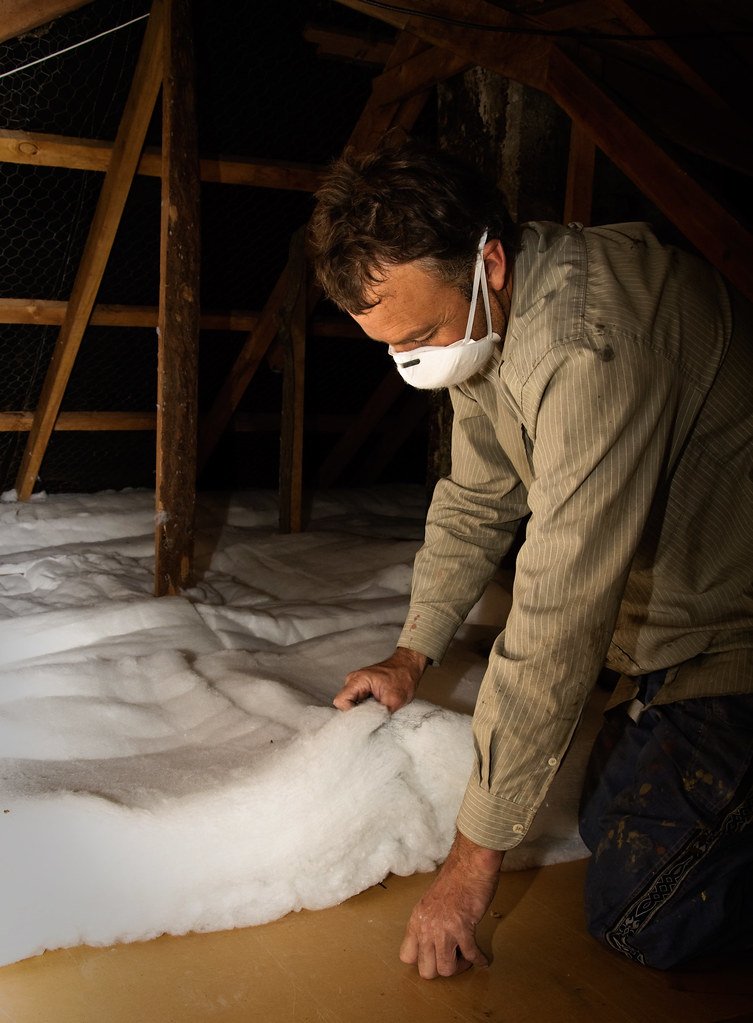
For homeowners across the United States, managing escalating heating and cooling costs has become an exhausting monthly ritual. Whether you are battling brutal winters in the Northeast or facing scorching summer heatwaves across the Sunbelt, your HVAC system is likely working overtime. The most cost-effective remedy is not replacing your heating unit; it is sealing the building envelope. By pairing professional air sealing with high-performance attic insulation, you can drastically reduce conditioned air loss. However, before investing thousands of dollars, smart homeowners want to know the hard numbers. Calculating your true return on investment requires looking past basic utility bills to factor in localized climate zones, upfront installation costs, sweeping federal tax credits, and instant utility rebates. In this comprehensive guide, we will break down the exact formulas, eligibility guidelines, and step-by-step strategies to accurately calculate your upgrade ROI and maximize every dollar spent.
Understanding the Baseline Costs and Energy Losses
Before computing any financial returns, you must understand where your home is losing money. According to the U.S. Department of Energy, air leaks account for up to 30 percent of a home’s heating and cooling energy loss. When you combine leaky windows, unsealed rim joists, and under-insulated attics, your furnace and air conditioner are essentially conditioning the great outdoors.
Average Installation Costs for US Homeowners
To calculate an accurate return on investment, you need a realistic baseline of upfront costs. Nationally, the cost of comprehensive air sealing combined with upgrading attic insulation to a recommended R-60 value typically ranges between $2,500 and $6,500 for a standard 2,000-square-foot single-family home.
Consider this real-world example: A homeowner in Columbus, Ohio, receives a contractor quote of $4,200 for blown-in cellulose attic insulation and whole-house air sealing. Without incentives, this upfront cost feels steep. However, factoring in federal programs and local utility incentives dramatically alters the financial picture, turning an expensive home repair into a high-yielding financial asset.
Leveraging Federal Tax Credits and Utility Rebates
The modern financial landscape for home energy upgrades is heavily subsidized by federal policy and local energy providers, which aggressively compresses your payback timeline.
Energy Efficient Home Improvement Credit (Section 25C)
Under current federal guidelines, the Energy Efficient Home Improvement Credit allows homeowners to claim up to 30 percent of the total project cost for insulation and air sealing materials, with an annual cap of $1,200. This means if your out-of-pocket material cost for air sealing and insulation is $4,000, you can deduct a direct $1,200 from your federal tax liability dollar-for-dollar.
Local Utility Rebate Programs
In addition to federal tax credits, most major electric and gas utilities offer cash-back rebates for homeowners who perform weatherization projects. These rebates are often contingent upon hiring a BPI-certified (Building Performance Institute) contractor to perform a pre- and post-upgrade blower door test. Utility rebates typically range from $500 to $1,500 depending on your region and the measured reduction in air leakage.
Step-by-Step Guide to Calculating Your Insulation ROI
Calculating your specific insulation ROI involves a straightforward mathematical process that contrasts your net out-of-pocket investment against your annual utility bill reductions.
Step 1: Determine Your Net Out-of-Pocket Expense
Take your contractor’s gross bid and subtract all applicable government incentives and utility rebates. For example, if your total project cost is $5,000:
- Gross Project Cost: $5,000
- Federal Tax Credit (30% capped at $1,200): -$1,200
- Local Utility Rebate: -$800
- Net Out-of-Pocket Investment: $3,000
Step 2: Calculate Annual Energy Savings
Next, estimate your annual utility savings. According to EPA Energy Star data, homeowners save an average of 15 percent on heating and cooling costs by air sealing their homes and adding insulation to attics, crawlspaces, and basement rim joists. If your annual combined gas and electric energy bill is $2,400, a 15 percent reduction equals $360 in direct annual savings.
Step 3: Calculate Payback Period and ROI Percentage
To find your simple payback period, divide your net investment by your annual savings: $3,000 / $360 = 8.3 years. To find your annual percentage return, divide your annual savings by your net investment and multiply by 100: ($360 / $3,000) * 100 = 12% annual ROI. This outperforms many traditional market investments with the added benefit of immediate home comfort.
Comparing Upgrades: Insulation vs. Other Home Improvements
When planning home renovations, comparing the financial return of various projects helps prioritize your capital. The table below illustrates how insulation and air sealing stack up against other common residential investments.
| Upgrade Project | Average Cost | Annual Energy Savings | Federal Tax Credit | Simple Payback Period |
|---|---|---|---|---|
| Attic Insulation & Air Sealing | $4,500 | $400 | Up to $1,200 | 7 to 9 Years |
| High-Efficiency HVAC Heat Pump | $12,000 | $650 | Up to $2,000 | 12 to 15 Years |
| Solar Panel Installation | $18,000 | $1,500 | 30% of total cost | 8 to 10 Years |
| Energy-Efficient Windows | $15,000 | $300 | Up to $600 | 25+ Years |
Key Takeaways and Pro Tips for Maximum Savings
Maximizing the financial return on your weatherization project requires strategic planning and careful contractor selection. Keep these foundational principles in mind:
- Always get a blower door test: This diagnostic tool pinpoints air leaks and proves energy loss reductions required by many utility rebate programs.
- Prioritize the attic first: Heat rises, making attic air sealing and insulation the highest-yielding thermal upgrade in almost every climate zone.
- Combine projects: Bundling insulation upgrades with heat pump installations or window replacements can sometimes unlock higher tier whole-home efficiency bonuses.
- Keep meticulous documentation: Save all contractor invoices, BPI test reports, and manufacturer specification sheets for tax filing time.
Expert Pro Tip: Never add insulation over existing moisture damage or active roof leaks. Always resolve water intrusion and execute comprehensive air sealing before blowing in loose-fill insulation, otherwise trapped humidity can cause catastrophic mold growth and structural wood rot.
Frequently Asked Questions
What is the typical lifespan of home insulation and air sealing?
Fiberglass and cellulose insulation can easily last 30 to 50 years if kept dry and undisturbed. Spray foam insulation can last the lifetime of the structure. However, caulk and weatherstripping used in air sealing may require minor touch-ups or replacement every 5 to 10 years as homes settle.
Can I do air sealing myself to lower my upfront costs?
Yes, DIY air sealing using expanding foam and caulk around baseboards, electrical outlets, and windows is a great weekend project for homeowners. However, to qualify for federal tax credits and local utility rebates, major insulation additions and comprehensive blower-door-guided air sealing often require a licensed professional.
How do I know what R-value my attic needs?
The U.S. Department of Energy categorizes the country into distinct climate zones. Colder northern states (Zones 5 through 8) typically require an attic R-value between R-49 and R-60, while milder southern zones (Zones 1 through 3) generally require R-30 to R-38.
Do insulation upgrades increase property resale value?
Yes. Energy-efficient upgrades are increasingly highlighted on real estate listings through green home certifications and home energy scorecards. Buyers are actively willing to pay a premium for homes with lower documented monthly utility expenses.
Are DIY insulation kits eligible for the Section 25C tax credit?
Materials purchased at home improvement stores and installed by the homeowner do qualify for the 30 percent Section 25C tax credit, provided they meet specific IECC standards. However, installation labor costs are only deductible if performed by a qualified contractor.
Latest News & Current Updates
Stay up to date with recent headlines and market developments related to How to Calculate ROI on Home Insulation and Air Sealing Upgrades with Rebates:
- Insulating project ROI – Why proven insulation solutions matter now more than ever — Hydrocarbon Engineering (01 Aug 2022)
- ROI: Designing for reduced embodied carbon | AIA — The American Institute of Architects: AIA (30 Nov 2023)
- Case Studies on the Thermally Induced Stresses in Insulating Glass Units via Numerical Calculation — glassonweb.com (11 Aug 2022)
- Cost to Replace Vinyl Siding, ROI and Ways to Save — NerdWallet (01 Aug 2025)